


 Vietnamese
 Japanese
 Korean
 French
 Chinese
 Khmer
Khmer Thailand
 Russian
Dịch vụ thẩm mỹ
Cosmetic services
-
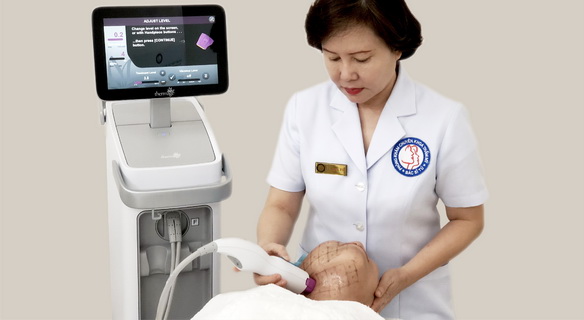
Apply the world’s newest beauty technologies: Thermage FLX, Sofwave, CFU Elite, Ultherapy, Laser PicoSure, Laser PicoWay, Pellevé...
-
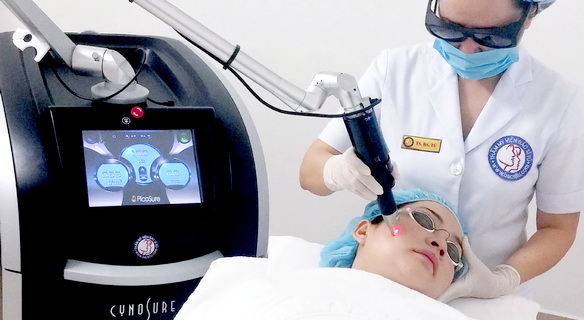
Apply the world’s newest beauty technologies: như: UltraClear Laser, Laser PicoSure, Laser PicoWay, Laser Đồng, Laser Soprano Accord, Laser GentleLASE Pro, Laser V-Beam, Laser Q-Swiched Nd-YAG, Laser CT3, Laser MedLite...
-
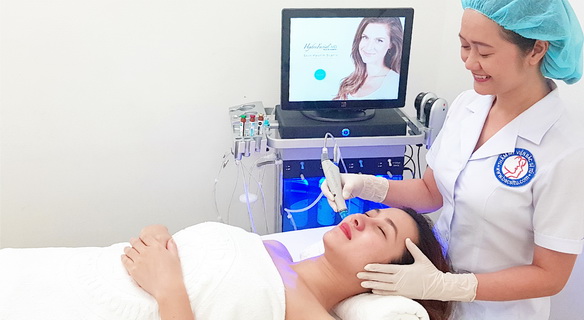
Apply the world’s newest beauty technologies: Meso, HydraFacial, Placental Extracts Electroporation, Vitamin C, E, & Y-PGA Iontophoresis, GentleWay LED...
-
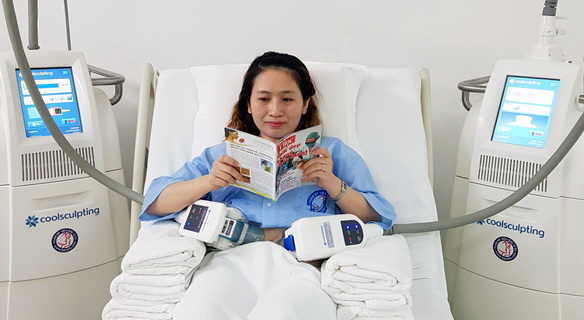
Apply the world’s newest beauty technologies: CFU Elite, Contoura, Cooltech Define, CoolSculpting, Laser SculpSure, Vanquish Me, RF Legacy, Exilis, Laser Ilipo, Cellactor, Beam....
Acne, acne scars, striae... treatment
Acne is a chronic disorder caused by excess production of oil from sebaceous glands causing of the hair follicles to become plugged. Pimples, black heads, white heads, cysts and sometimes scarring can result.
|
Acne usually appears around puberty but may also start in adulthood. About 85% of teenagers develop Acne, 15% of which may be moderate to severe. Acne is not infectious and the exact cause is not known but there are many treatments which are effective, but Acne is slow to respond or returns after treatment is stopped. Antibiotics are commonly prescribed to treat the resulting acne infections and pimples, often reducing the patients own immune system. For reasons no one completely understands, hair follicles sometimes get blocked. Sebum (oil) which normally drains to the surface gets blocked and bacteria begins to grow and an acne pimple is formed. Both white heads and blackheads start out as a "microcomedone" or below the skin. The picture below is a "microcomedone". The result of a microcomedone can be one of two scenarios. A blackhead or a white head. For each condition, blackheads and white heads are filled with trapped sebum and bacteria. The acne treatment advice is the therefore the same for both white heads and black heads.
Acne Conglobata is a severe long term, painful disease. It is characterized by large inflammatory cysts and nodules on the face an upper trunk. Acne can be caused by occupational factors – exposure to oils, tars and halogenated hydrocarbons. Drugs such as corticosteroids (topical and systemic), progestogens, and anabolic steroids. Cheap greasy cosmetics, lotions and moisturizers are to be avoided. Doctors who often dismiss the condition as trivial underestimate the psychological effects of Acne. Stress and anxiety may be a causative factor in Acne as in other skin disorders and having a condition that rules your life described as trivial is stressful indeed! It will come as no surprise to Acne sufferers that studies have shown intolerance and bigotry against Acne in the work place is common. A gradual lowering of self-esteem and self-confidence can make relationships, gaining employment, or any social activity very difficult. Even going to the Doctor to discuss this acutely embarrassing condition may be a major hurdle to overcome.
Over 50% of acne sufferers report people making nasty remarks or fun of them, often in an offhand way, as though it is of no importance, even in the press people with skin complaints are talked about in a derisory and scornful manner. Acne remains a cruel disease with no definitive cure. Th ings that often make acne worse: Oil-based makeup, suntan oil, hair gels and sprays - Stress - In girls: menstruation - Squeezing or picking at blemishes - Hard scrubbing of the skin - Too much exposure to the sun - Things that don't cause acne - Dirt - Foods such as chocolate or French fries - Sexual activity - Masturbation . Does acne cause scars? Acne, especially cystic acne, can cause scars in some people. You can help reduce scarring by not squeezing or picking at blemishes. Also, avoid scrubbing your skin. If you do get scars, treatments are available. How Is Acne Treated? Most serious scarring is caused by the more severe forms of acne, with nodules more likely to leave permanent scars than other types of acne. The best way to deal with acne is to get treatment soon after the acne appears to prevent further severe acne and more scarring. If you have nodules, see your doctor or dermatologist for treatment. The latest acne treatment therapy is use of Radio Frequency (RF), IPL, and Laser to replace drugs. These Lasers can treat acne, prevent acne scarring and treat acne scarring. If you have serious scarring from previous bouts with acne, there are some things you can do. One form of treatment is laser resurfacing, which can be done in the doctor's or dermatologist's office. The laser removes the damaged top layer of skin and tightens the middle layer, leaving skin smoother. This can take anywhere from a few minutes to an hour. The doctor will try to lessen any pain by first numbing the skin with local anesthesia. It usually takes between 3 and 10 days for the skin to heal completely. Another method for treating acne scarring is dermabrasion, which uses a rotating wire brush or spinning diamond instrument to wear down the surface of the skin. As the skin heals, a new, smoother layer replaces the abraded skin. It may take a bit longer for skin to heal using microdermabrasion — usually between 10 days and 3 weeks. The newest form of treatment for acne scarring is called fractional laser therapy. This type of treatment works at a deeper level than laser resurfacing or dermabrasion, because fractional laser therapydoesn't wound the top layer of tissue, healing time is shorter. Fractional laser therapy is quite costly, and it's not usually covered by insurance. A person's acne will need to be under control before having anyof these treatments. Depending on the severity of the acnescars, the doctor or dermatologist may also suggest a chemical peel or dermabrasion to help improve the appearance of scarred areas. Thesemilder treatments can bedone right in the office. Sometimes doctors inject material under the scar to raise it to the level of normal skin. Finally, in some cases, a doctor may recommend surgery to remove deeply indented scars. One thing you shouldn't do to deal with acne scars is load up your face with masks or fancy lotions — these won't help and may irritate your skin further, making the scars red and even more noticeable. If you have a red or brownish mark on your face that you got from a bad zit, have no fear — it will eventually fade, just like the scars you had on your knees after you fell off your bike when you were a kid. However, it may take 12 months or longer — so your best bet is to avoid these kinds of marks by not squeezing or popping your zits, no matter how tempting it may seem. One of the latest developments in treating scars associated with acne is acne laser treatment. This type of treatment uses lasers to remove old skin so that new skin can develop. Laser treatment for acne is a relatively new procedure but even though only a few studies have been done on this, laser treatment of acne scars is showing a lot of promise because the actual treatment penetrates into the skin with a fine degree of control that even the depth is uniform -- a far departure from other more conventional methods of treating acne scars.
BEFORE AND AFTER TREATMENT PHOTOS
|


Related services
-
 View More
Tattoo removal, acne scar treatment, removal of pigmented lesions, skin rejuvenation... by LASER PICOSURE
View More
Tattoo removal, acne scar treatment, removal of pigmented lesions, skin rejuvenation... by LASER PICOSURE
-
 View More
Tattoo removal without scar by Laser Revlite
View More
Tattoo removal without scar by Laser Revlite
-
 View More
Whitening skin, melasma, rejuvenation treaments… by DUAL YELLOW Laser
View More
Whitening skin, melasma, rejuvenation treaments… by DUAL YELLOW Laser
-
 View More
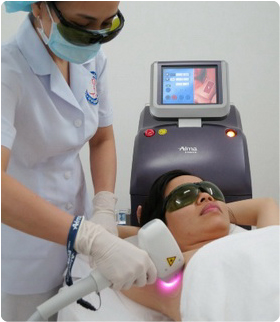
Pain-free laser hair removal by Laser Soprano
View More
Pain-free laser hair removal by Laser Soprano
-
 View More
Laser hair removal by Laser GentleLASE Pro with cooling device for skin protection
View More
Laser hair removal by Laser GentleLASE Pro with cooling device for skin protection
-
 View More
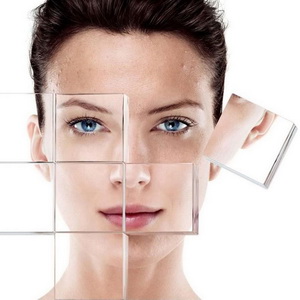
Pigmented lesion removal
View More
Pigmented lesion removal
-
 View More
Facial, leg vein treatment by Laser
View More
Facial, leg vein treatment by Laser