



Rejuvenation
Dịch vụ thẩm mỹ
Cosmetic services
-
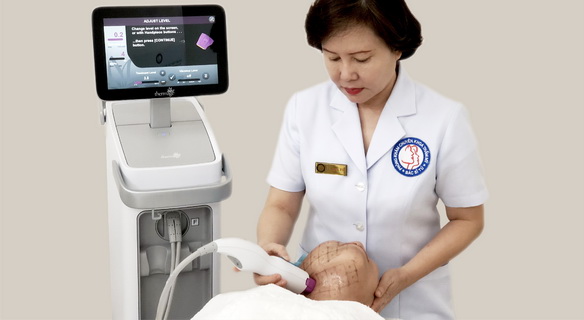
Apply the world’s newest beauty technologies: Thermage FLX, Sofwave, CFU Elite, Ultherapy, Laser PicoSure, Laser PicoWay, Pellevé...
-
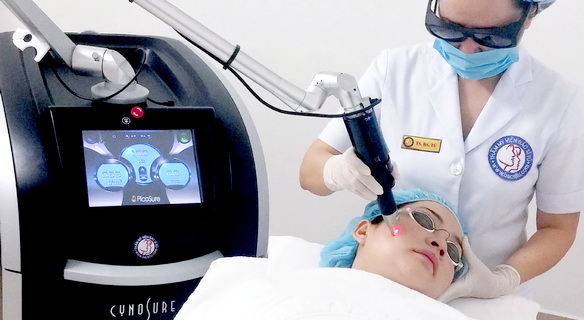
Apply the world’s newest beauty technologies: như: UltraClear Laser, Laser PicoSure, Laser PicoWay, Laser Đồng, Laser Soprano Accord, Laser GentleLASE Pro, Laser V-Beam, Laser Q-Swiched Nd-YAG, Laser CT3, Laser MedLite...
-
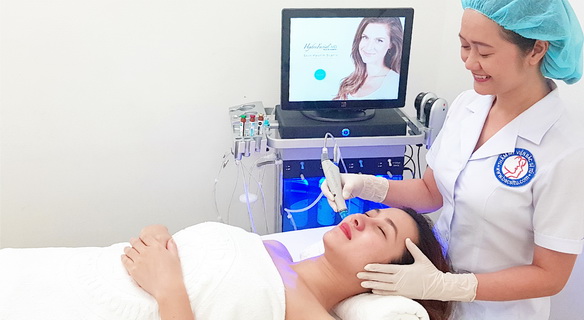
Apply the world’s newest beauty technologies: Meso, HydraFacial, Placental Extracts Electroporation, Vitamin C, E, & Y-PGA Iontophoresis, GentleWay LED...
-
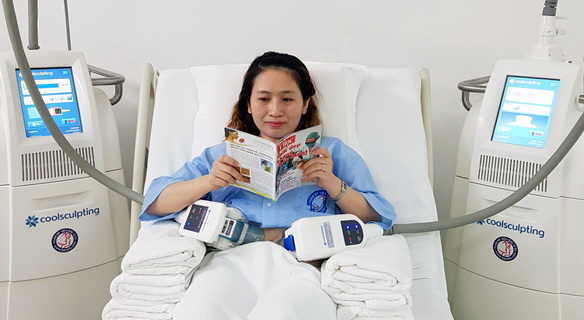
Apply the world’s newest beauty technologies: CFU Elite, Contoura, Cooltech Define, CoolSculpting, Laser SculpSure, Vanquish Me, RF Legacy, Exilis, Laser Ilipo, Cellactor, Beam....
Face-lift, skin tightening by THERMAGE FLX
There are many variations of facelift surgery. You should ask your doctor about facelift variations, which may include the deep plane lift or composite lift, SMAS lift, subperiosteal lift, skin lift, mid facelift, and feather or thread lift.
|
The Facelift Surgery
Facelift surgery may be performed by making an incision at the temples behind the hairline. The incision typically extends downward, along the natural creases in the skin, in front or on the edge of the ear, in the crease of the ear lobe, and behind the ear. Making the incision in the natural creases helps hide scarring after surgery. The surgeon then separates the skin and muscles of the face from the deeper facial tissues. In some cases the skin is removed, in others the skin and muscle tissues are reshaped. The underlying muscle may be tightened with the skin, or separately. After the tightening or removal of excess skin, the skin is re-draped and sutured or stapled in place. Facelift patients normally undergo general anesthesia. Time in surgery is approximately 90 to 120 minutes. In some cases, drainage tubes are left in place under certain areas of the skin for several days to reduce post-surgical swelling. Depending upon the extent of the procedure, a facelift may be performed under local anesthesia — while you are numbed and sedated, but awake, or a light general anesthetic, where you are lightly sleeping. You should discuss anesthesia options with your plastic surgeon and the anesthesiologist Recovery After Facelift Surgery
After surgery, patients may experience moderate swelling of the eyelids and other facial areas. Immediately after surgery a large fluffy dressing is usually applied. Typically within one day after surgery it is removed and may be replaced with an elastic wrap. There is normally some discomfort following facelift surgery, which can be managed with medications. Strenuous activity should be avoided until the swelling has subsided. This can take four to six weeks; however, within two weeks the swelling should be reduced enough to engage in some social activities. Many patients prefer to delay significant social activities for four weeks after surgery. The skin may feel dry and feel rough for a few months. Smoking reduces blood flow to areas of the facial skin, so you shouldn't smoke a month before and a month after surgery. Stopping smoking will help the healing process. One in ten smokers will experience skin death at the incision site if they continue to smoke after surgery. Secondary Facelift Surgery Unfortunately, people continue to age. Your skin may eventually start to loosen and sag again. Secondary facelift procedures are not uncommon to reposition and tighten the facial skin, underlying tissue and/or muscles. Another reason for a secondary procedure: after undergoing facelift surgery, the untreated areas of your face may appear more lax than the treated area. You may want a secondary procedure to provide a more consistent balanced appearance. The extent of the secondary procedure depends upon the extent of the first facelift procedure and the effects of natural aging. For example, many deep plane facelift patients are fully satisfied with a secondary "tuck" procedure and do not require a more extensive secondary procedure that may be required for a patient who underwent a less invasive initial facelift. Facelift Does Not Affect All Facial Areas The treatment plan for a facelift patient may include other plastic surgery procedures and minimally invasive procedures to provide a full facial rejuvenation benefit. The facelift in and of itself involves improvements to the jaw line, cheeks, and nasiofold area, but not necessarily the neck, brow, forehead, and eyelids. During the consultation with a plastic surgeon, he or she will evaluate your face to develop a comprehensive treatment plan. During the face lift procedure, your plastic surgeon may perform a procedure to improve the appearance of the eyelids, called blepharoplasty (eyelid surgery). Blepharoplasty may also be performed after recovery from the facelift. A forehead lift (browlift) may also be performed during the facelift or after the recovery period. The endoscopic browlift procedure may be an alternative browlift approach that is less invasive than the traditional browlift. You may consider a neck-lift to improve the appearance of your neck and provide a more balanced youthful appearance. A facelift is meant for folds and creases of laxity; it is not meant to improve the appearance of wrinkle lines. Wrinkle lines may be improved after plastic surgery with skin resurfacing techniques, such as laser skin resurfacing, chemical peels or microdermabrasion. Wrinkles may further improve with the use of injectables such as collagen or Botox. Loss of volume and folds including nasolabial folds may be treated with injectables such as restylane to produce a fully satisfactory outcome. These solutions may not completely eliminate the signs of aging, including sagging, laxity, volume loss and folds. Successful strategies often include a combination of procedures and treatments, such as blepharoplasty, to achieve facial rejuvenation.
Thermage Thermage is a non-invasive, no-downtime cosmetic surgery technique that tightens aging skin and renews the facial features. Thermage was approved by the Food and Drug Administration in late 2001 and has grown in popularity in the last few years. Thermage uses radiofrequency technology to enhance the appearance of facial skin around the eyes and forehead, producing desirable results with no incisions and virtually no recovery time. The skin is composed of many layers. The first layer is called the epidermis and the second, the dermis. The dermis layer of the skin is responsible for collagen production. Collagen is a protein which provides the skin with strength and firmness. With aging, the body begins to decrease its natural production of collagen which can lead to wrinkles and skin laxity. Thermage targets the collagen in the dermis layer of the skin. Using the heat from radiofrequency technology, Thermage causes the dermis and underlying tissues to tighten, thereby leading to tighter and more youthful looking skin. During the Thermage procedure, the epidermis (outermost layer of the skin) is cooled down with a spray so as not to damage the visible layers of the skin. The Thermage procedure also works by activating the body's own natural healing response, leading to new collagen production. The Thermage procedure does not require anesthesia, though a numbing cream may be applied to the treatment areas prior to the procedure. The entire Thermage procedure can last anywhere from a few minutes to an hour, depending on the size of the treatment area. There is little pain involved in the Thermage procedure. Patients describe the sensation felt during the procedure as a mild pinching or burning that goes away with little discomfort. Patients can resume normal daily activities almost immediately after the Thermage procedure is complete, with little or no downtime. Thermage patients will normally notice results two weeks to six months following a single procedure. These results can last anywhere from six months to two years. The average cost of a Thermage procedure is $2,000, whereas a facelift costs about four times as much and requires invasive surgery with a much longer recovery time. As with any medical procedure, there are possible risks that patient should be aware of. Minor skin peeling occurs in approximately six percent of Thermage patients, though this usually does not result in any permanent scarring. The FDA has received 52 reports of more serious side effects suffered by Thermage patients, including scarring, indentations, dimpling and other skin irregularities. These side effects are relatively rare. Overall, Thermage is a safe procedure that delivers successful results with little recovery time. The new Thermage CPT System (A LEAP FORWARD IN SKIN TIGHTENING & CONTOURING TECHNOLOGY) The new Thermage CPT System represents a leap forward in skin tightening and contouring technology. Superior results and greater patient comfort are at the core of the new system, which leverages our proprietary Comfort Pulse Technology™ and a vibrating handpiece for more comfortable treatments. Improvements:
Our new energy delivery algorithm interweaves pulsed radiofrequency delivery with cooling bursts mimicking Transcutaneous Electrical Nerve Stimulation ("TENS") therapy, to disrupt the brain's neural response and improve comfort during treatment. COMFORT: A new vibrating handpiece offers a clinically proven improvement in patient comfort. In controlled, split-faced clinical studies, comparing treatment of over 40 patients with vibration to treatment without vibration, all patients preferred being treated with vibration. EFFICACY: Our redesigned treatment tips deliver enhanced heat distribution and uniformity, which lead to improved volumetric heating. A greater volume of tissue is heated to target temperatures and the heating is more evenly distributed across the treatment area. Data from our clinical study demonstrates that the Thermage CPT system heats four times more tissue to therapeutic temperatures than current technologies. PATIENT SATISFACTION: Patients will be happier with the results and the treatment experience with the Thermage CPT system. 100% of study patients preferred treatment with the Thermage CPT system vs. treatment with prior technologies. Average patient satisfaction scores 3 months post treatment were 4.2 out of 5 (1=dissatisfied, 5=very satisfied). Tran Thi Anh Tu MD., PhD is the only Vietnamese Doctor who has a before & after photo introduced in the website of Thermage: http://www.thermage.com/thermage-consumer/en/what-to-expect/thermage-results/id/235 |